
A planning resource for brand and sourcing teams. Engineering recommendations are not a statement of a particular project's specification, inspection standard, price, MOQ or delivery commitment.
Separate one-time investment from recurring production cost
Tooling is normally an up-front investment, while molded parts, decoration, assembly, packaging and freight recur with production. Prototypes, engineering work, trial parts and agreed tool corrections may also sit outside the unit price. Ask every supplier to label these items instead of combining them into one number that cannot be compared.
The agreement should state mold ownership, included storage or maintenance, change charges and transfer terms. Paying a tooling invoice does not settle these questions unless the contract does.
Six decisions that change a model kit quotation
| Decision | Why it changes cost | Useful buyer input |
|---|---|---|
| Part breakdown and mold plan | Part count alone does not set tool count; size, color groups, cavity balance and mold construction determine the plan. | Assembled size, available CAD, intended part count and color strategy. |
| Geometry and release | Undercuts, deep features, thin sections, slides, lifters and difficult ejection can add tool complexity or require redesign. | Priority surfaces, required geometry and areas that may be changed during DFM. |
| Material and molded colors | Resin grade, color changes and separate material groups affect molding and runner planning. | Material preference, functional reason and molded-color references. |
| Finish and decoration | Painting, Tampo Print, decals and protected cosmetic areas add operations, fixtures and approvals. | Color artwork, finish samples and acceptance references. |
| Quantity and SKU plan | Production quantity, repeat orders and variant splits influence tool and production economics. | A realistic quantity range by SKU, not an unsupported forecast. |
| Pack-out and approval scope | Instructions, loose parts, inserts, retail packaging, inspection and revision rounds all require ownership and time. | Pack contents, target market, schedule and named approval stages. |
Why part count is not a pricing formula
Two kits with the same part count can need very different tools. Projected area, delicate steel conditions, visible-gate restrictions and incompatible materials or molded colors can change the mold plan. Family molds are useful only when the parts and process can be balanced together.
This is why a low price based on screenshots alone is not yet a production quote. Treat it as an early budget indication until the supplier lists its assumptions and completes the agreed manufacturing review.
Prepare a quote-ready project brief
- Authorized concept art, renders, CAD or a physical reference, with file status identified.
- Target assembled size, pose or movement, assembly method and expected user skill level.
- Known materials, molded colors, painting, printing, decals and visible-surface priorities.
- Estimated quantity range for each SKU or colorway and whether repeat production is expected.
- Required packaging components, instructions, labels, inserts and shipping configuration.
- Target sales markets and any buyer-defined testing, inspection or documentation needs.
- Target date, approval owners and unknown items that require engineering advice.
Compare suppliers on the same commercial boundary
Normalize quotes before selecting one. Confirm whether each includes engineering, prototypes, every planned tool, trials, correction rounds, resin, decoration, assembly, packaging, inspection and delivery terms. Ask which items remain estimates until design approval.
A lower mold price can coexist with higher unit cost, more manual work or shorter assumed tool life. Compare the expected program, repeat orders and change risk rather than one figure.
Use ITTAK evidence without turning it into a generic price promise
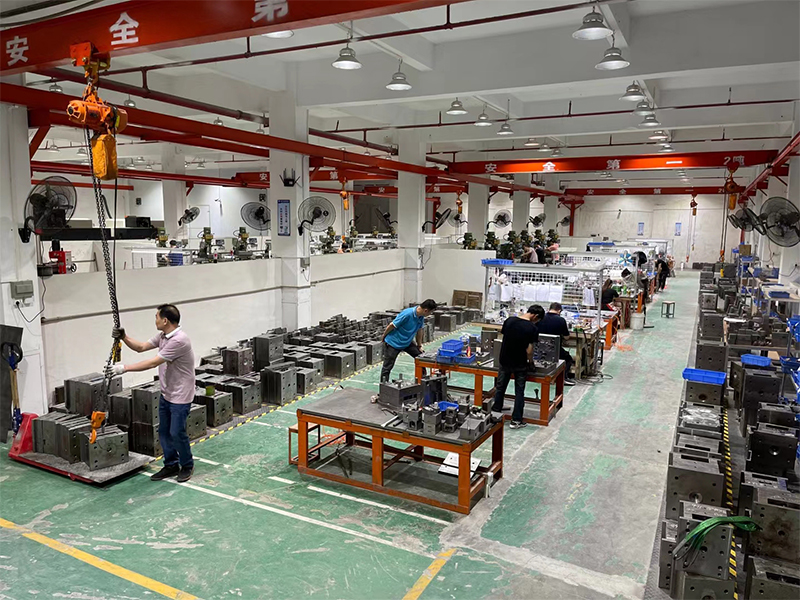
ITTAK states that it supports product engineering, mold making, injection molding, finishing, assembly and packaging, and that HIPS, ABS and PVC components are produced in-house. Its authorized KAIYODO / ARTPLA galleries show finished products, runners and selected tooling. Those facts are relevant evidence of scope, but they do not establish a price, MOQ, tolerance or schedule for a different product.
Send the available information and ask ITTAK to identify missing decisions before treating a response as a production quotation.
Related project evidence
Common buyer questions
Can a model kit be quoted from concept art alone?
Concept art can support an early feasibility and budget conversation, but a dependable tooling and production quote normally needs clearer size, part, material, finish, quantity and packaging assumptions. The supplier should state what remains provisional.
How much does a plastic model kit mold cost?
There is no responsible universal figure. Tool count, part geometry, projected area, steel conditions, actions, runner strategy, finish, expected production and approval scope all affect the result. A project-specific DFM and mold plan are needed.
What is ITTAK's minimum order quantity?
ITTAK has not published one universal MOQ for every custom model kit. Share a realistic quantity range and SKU split so the manufacturing route and commercial fit can be reviewed for the project.
References and further reading
- Protolabs — Understanding Injection Mold Cost
Manufacturing background on geometry, undercuts, cavities, material, finish and DFM as cost drivers; not an ITTAK price source.
- Syuto — Plastic Model Planning, Design and Manufacture
A Japanese model manufacturer showing that mold configuration and quotations are discussed from drawings, photographs or samples.
- Pla Moul Seiko — Mold Making
Primary manufacturer background on mold design, runners, maintenance, trials and production planning.
Plan your next step
- Plastic model kit manufacturing
- How plastic model kits are manufactured
- How to evaluate a model kit OEM supplier
Start with a non-confidential overview. Ask about an NDA and an appropriate transfer method before sending unreleased designs.
Request a Project Review