
A planning resource for brand and sourcing teams. Engineering recommendations are not a statement of a particular project's specification, inspection standard, price, MOQ or delivery commitment.
Quality planning begins before mass production
The buyer and manufacturer should translate drawings, approved samples and product requirements into inspectable criteria. That includes critical interfaces, visible surfaces, molded color, decoration, runner identity, loose components, instructions and packaging. If a requirement cannot be inspected consistently, it is not yet a useful release criterion.
Separate regulatory or laboratory work from factory inspection. Testing and documentation vary by product, age grading and target market. They should be named in the project agreement rather than implied by a generic statement that the product is compliant everywhere.
Use four connected quality layers
| Layer | Review focus | Typical record |
|---|---|---|
| Tool and trial part | Formation, short shots, flash, sinks, warpage, gate evidence, ejection and agreed critical dimensions. | Trial issue list, measurements, photographs and correction approval. |
| Fit and assembly | Build sequence, alignment, gaps, insertion, retention, interference, stability and finished appearance. | Defined build check with sample identity and disposition. |
| Runner and SKU | Runner letter or identity, molded color, variant assignment, loose parts and quantity. | BOM or pack specification linked to the production lot and SKU. |
| Final box | All runners, instructions, decals, accessories, protective items, labels and carton configuration. | Pack-out checklist and release record at the agreed sampling level. |
Connect defect checks to product consequences
A small gate mark may be acceptable on a hidden surface but unacceptable across a face. Minor distortion may not matter on scenery but can prevent two shells from closing. Flash near a decorative edge is different from flash inside a critical interface. Define severity by what the feature does and where the customer sees it.
Critical dimensions should be few enough to control and directly connected to fit or function. Measuring many convenient dimensions does not replace checking the interfaces that govern the assembly.
Make the build check reproducible
Use the approved instructions, intended tools and defined sequence. Identify the runner and lot, record who built the sample, and note trimming or adjustment that a normal customer would not be expected to perform. The review should cover the intermediate assemblies as well as the final pose or display.
If the kit has multiple materials, colorways or variants, select samples that exercise the relevant combinations. A successful build of one hand-picked prototype does not establish routine production consistency.
Treat completeness as a manufacturing characteristic
Multi-runner kits are vulnerable to mix-ups even when every molded part is individually good. Give each runner, loose component and printed item a controlled identity. Variant and SKU changes should be visible in the work instructions and pack checks rather than held in operator memory.
Packaging also protects quality after inspection. Review how fine parts, decorated surfaces, decals and instructions are separated or supported, and confirm the carton configuration expected at delivery.
Evidence to request before production release
- Approved trial-part issue list with open items clearly separated from closed items.
- Current drawings, visual standards or signed samples and their revision identity.
- Defined critical dimensions and assembly checks with a practical method.
- Runner, variant and final-pack BOM for each SKU.
- Inspection or sampling plan agreed for the project, without assuming 100% inspection.
- Named buyer and manufacturer approvers for tool correction and production release.
Related project evidence
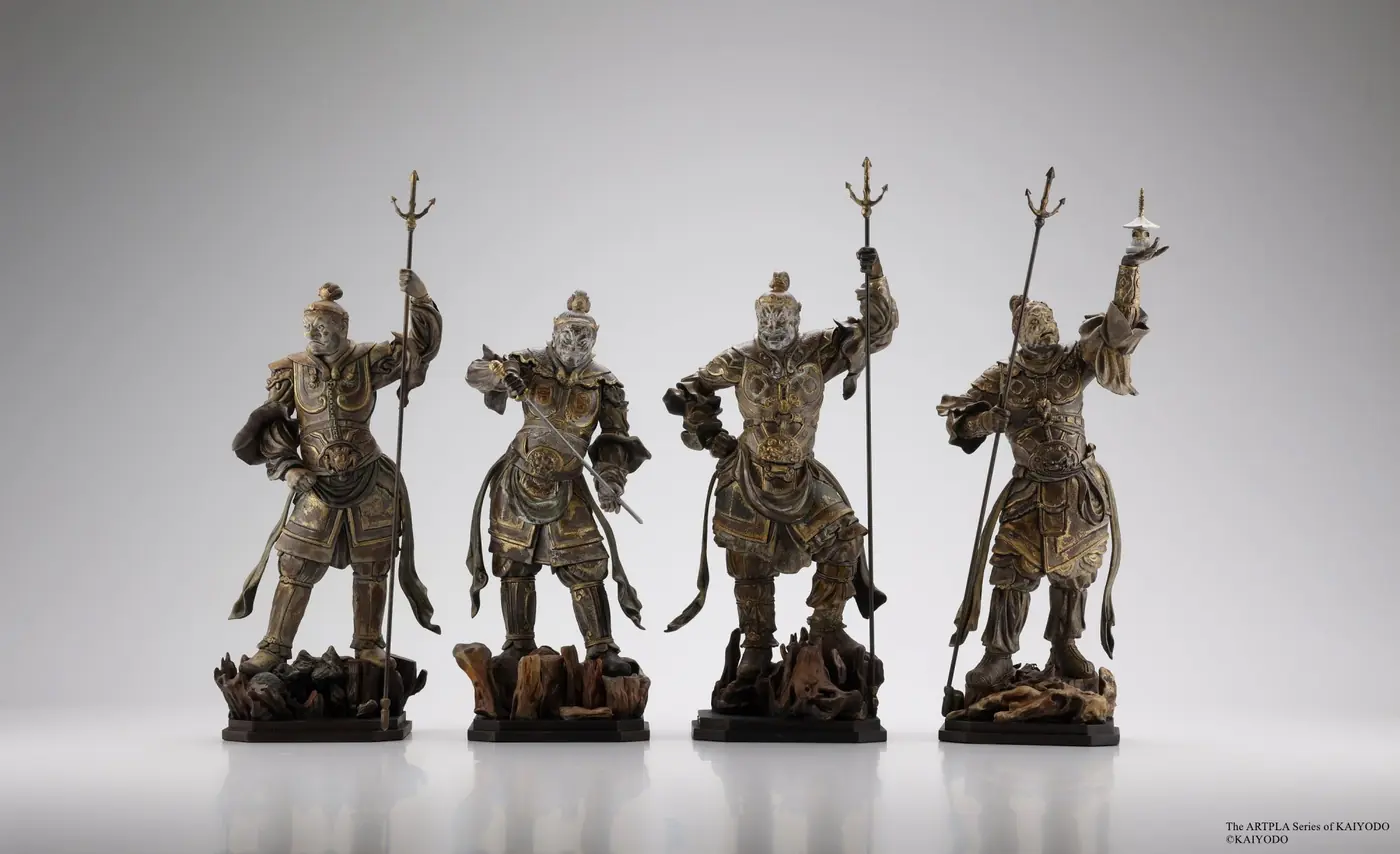
KAIYODO / ARTPLA names and images are shown with permission. The gallery illustrates the disclosed project; it is not a guarantee of specifications or test results for a new product.
Common buyer questions
Does dimensional inspection guarantee that a model kit will assemble?
No. Dimensions support control, but assembly can also be affected by geometry, distortion, trimming, material, sequence and interacting tolerances. A defined build check is still needed for critical assemblies.
Should every model kit part receive 100% inspection?
Not by default. Inspection level should follow risk, process capability, buyer requirements and the agreed quality plan. Claiming universal 100% inspection without a defined method is less useful than a clear, project-specific plan.
Who approves mass production?
The project should name the authorized buyer and manufacturer approvers and the evidence required for release. Approval should be recorded against a known sample or revision rather than inferred from informal messages.
References and further reading
- Bandai Namco Craft — Contract Toy Development and Manufacturing
Primary manufacturer description of quality setting, confirmation, inspection and design reviews before tooling and production decisions.
- Syuto — Plastic Model Planning, Design and Manufacture
Primary manufacturer background on test molding reviews for mating geometry, flow, sink, strength and molding balance.
- Pla Moul Seiko — Mold Making
Primary mold-maker context on managing precision, quality, cost and maintenance from trials through mass production.
Plan your next step
Start with a non-confidential overview. Ask about an NDA and an appropriate transfer method before sending unreleased designs.
Request a Project Review